




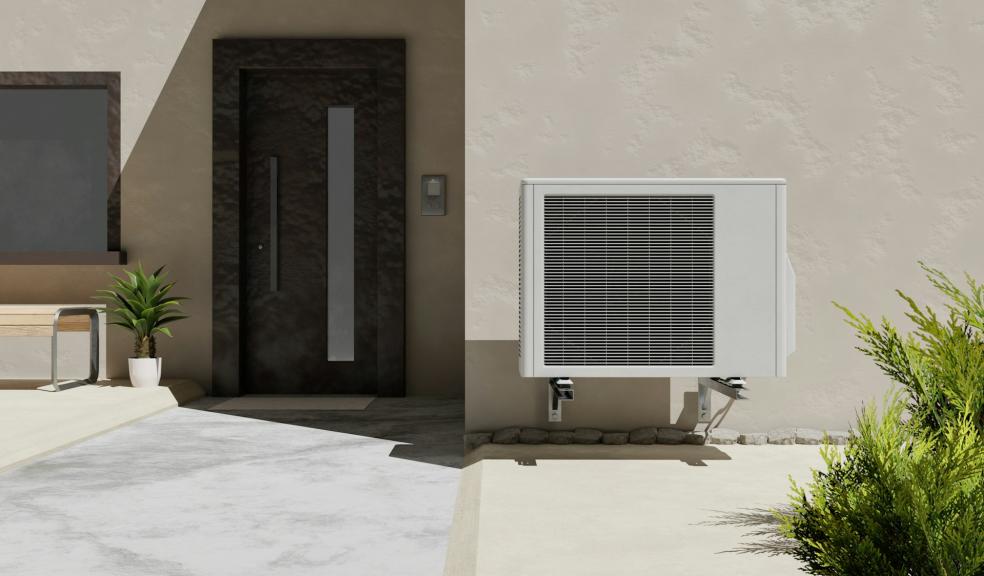
Water Treatment for Heat Pumps: Why a Low Temperature System Is Not a Low Risk System
A gas boiler running at 75 degrees spends its life quietly sterilising the water inside it. A heat pump running at 40 does not, and that single difference changes what has to go into the circuit, how often it has to be checked, and what happens to the electricity bill when it is ignored.
There is a comfortable assumption doing the rounds: heat pumps are gentler on a heating system than boilers, so the water side must matter less. Lower temperatures, less thermal stress, less to go wrong.
The first half of that is true. The conclusion is wrong, and BS 7593:2019 quietly says so. The standard now covers both heating and cooling circuits, and it specifically calls for biocide in cooling systems and in low temperature heating systems such as underfloor heating and heat pumps. That recommendation exists because microbiological growth is a real failure mode below about 50 degrees and simply is not one at 75.
Which raises the practical question of how you get chemicals into a sealed low temperature circuit that may already contain a glycol charge. Draining a radiator and pouring is not a serious answer on a heat pump system, and the standard route is a small stainless steel vessel plumbed across the flow with isolation valves. Culm Stores lists them by capacity and connection size here: https://culmstoreseltermltd.co.uk/en_GB/c/Chemical-Dosing-PotsINOX-Chemical-Dosing-Pots/57
The rest of this article is about why that matters more than it used to.
Forty five degrees is a friendlier temperature than seventy five, and not just for you
Bacteria and fungi have preferences. Most of the organisms that cause trouble in wet systems do well somewhere between 20 and 45 degrees, and a system that regularly climbs past 60 keeps knocking their populations back. A weather compensated heat pump circuit running a flow temperature in the high thirties on a mild day never gets near that.
What grows is biofilm: a thin, slimy, well-organised layer that attaches to heat transfer surfaces and to the inside of pipework. Two things follow. Biofilm is a very effective insulator for its thickness, so it degrades heat transfer exactly where you cannot afford to lose any. And it creates local oxygen-depleted conditions underneath itself, which is where sulphate reducing bacteria thrive and where pitting corrosion of steel begins.
The symptom is not a leak. It is a system that heats the house perfectly well in October and struggles in February, three winters after installation, with nobody able to say quite when it changed.
Small temperature differences leave no room for anything
A boiler system typically runs a delta T of 20 degrees, say 75 flow and 55 return. A heat pump is usually designed around 5 to 7 degrees, perhaps 40 flow and 35 return, and the flow rate is correspondingly much higher to move the same heat.
That has two consequences that installers moving over from gas tend to underestimate.
Fouling costs proportionally more. When your entire useful temperature difference is five degrees, a layer of biofilm or magnetite on the plate surfaces of the exchanger is eating a meaningful percentage of it. And because the compressor simply works harder to hold the target, the loss shows up as electricity consumption rather than as a fault. A coefficient of performance that drifts from 3.6 to 3.1 over four years is a large amount of money and produces no error code whatsoever.
Hydraulic resistance also matters more. Higher flow rates mean higher pressure drops across filters, strainers, plate exchangers and every fitting in the circuit. A filter sized for a boiler system can become a genuine restriction on a heat pump circuit, which is why filter selection on these systems is a design decision rather than a shelf-grab.
Glycol is a decision with consequences, not a top-up
Glycol gets added far more often than it needs to be, usually as insurance.
Where there is genuinely exposed pipework, an outdoor unit vulnerable to a power cut in a hard frost, or a monobloc arrangement without other frost protection, it earns its place. Where the entire water circuit is indoors and the controls have working frost protection, it frequently does not, and adding it costs you real performance.
Three penalties, all of them measurable:
- Viscosity rises, so pumping energy rises and the pump may need to be a size larger to hit the design flow rate
- Specific heat capacity falls, typically by around 5 to 10 per cent at domestic concentrations, so you are moving less heat for the same litres per second
- It degrades. Over years, and faster if the system runs hot or the inhibitor package is exhausted, glycol oxidises into acidic breakdown products, and the pH heads in the wrong direction
That last point is the one that catches people. Old glycol is not neutral. It is mildly aggressive, and it attacks the aluminium and copper components it was supposed to be protecting. Propylene glycol formulated for heating systems comes with its own inhibitor package, and that package has a service life. Automotive antifreeze is not a substitute and should never appear in a heating circuit.
Concentration drifts too. Every top-up with plain water dilutes it, and nobody records how much water went in during a repair three years ago. Which means you either measure it with a refractometer or you do not know it.
Fill water is a specification, not just water
Manufacturers of heat pumps and plate exchangers routinely reference VDI 2035 for fill and top-up water quality. It is a German guideline rather than a British standard, but it is what most technical manuals point at, and it sets limits on conductivity, total hardness and pH.
Two practical points come out of it.
Where a system contains aluminium, and plenty of heat exchangers do, the acceptable pH window is narrower than a steel-only system tolerates. Mains water in a hard water area can sit outside the range straight out of the tap, and the inhibitor chosen has to suit the metals present rather than being whatever was in the van.
Hardness matters because scale forms preferentially on the hottest surfaces, which in a heat pump system means the plates of the exchanger. BS 7593 recommends a scale reducer where hardness exceeds roughly 200ppm. Demineralised fill water is a step further and is worth the cost on larger systems or where the manual asks for it.
Getting chemicals in, and samples out
Here is the actual site problem. The old method of adding inhibitor was to crack open a radiator, pour a bottle in, and refill. On a sealed heat pump circuit carrying glycol, that method has three faults: you are introducing untreated water of unknown hardness, you are diluting a glycol charge you cannot easily measure, and you are guessing at the resulting concentration of everything.
A dosing pot solves it mechanically rather than cleverly. The vessel is plumbed across the circuit, usually on the return, with isolation valves either side and a fill point on top. You isolate it, fill it with inhibitor, biocide or glycol concentrate, close it, then open the valves and let the system flow carry the contents into the circuit. Nothing is drained. Nothing is diluted with mains water.
Stainless steel is the right material where glycol, biocides and years of service are involved, and the same fitting gives you a proper sampling point, so the annual water test the standard asks for becomes a two minute job instead of an excuse.
A schedule that actually gets followed
Once a year, alongside the service: test inhibitor concentration, check glycol percentage with a refractometer if glycol is present, check pH, clean the filter, verify the automatic air vent still works. Every five years: re-dose or send a sample for laboratory analysis.
Write the results down. MCS paperwork, manufacturer warranties and any future owner of the house will all eventually want a history, and a system with a documented water record is worth more than one without.
Questions that come up on site
Do heat pumps need inhibitor?
Yes, and biocide too in most cases. BS 7593:2019 extends to low temperature systems specifically because they are more vulnerable to microbiological growth.
Is glycol necessary in a UK domestic system?
Often not, if the water circuit is indoors and frost protection works. Where it is needed, use a heating-grade propylene glycol and monitor it.
Can I use the same inhibitor as a gas boiler system?
Only if it suits the metals present and is compatible with any glycol already in the circuit. Check the heat pump manual before the merchant's recommendation.
How do I add chemicals without draining the system?
Through a dosing pot plumbed across the circuit, which is also the cleanest way to take a water sample.
Three numbers belong in the commissioning file on the day of handover: inhibitor concentration, glycol percentage, and system pH. Everything above is easier to argue about with those written down.