




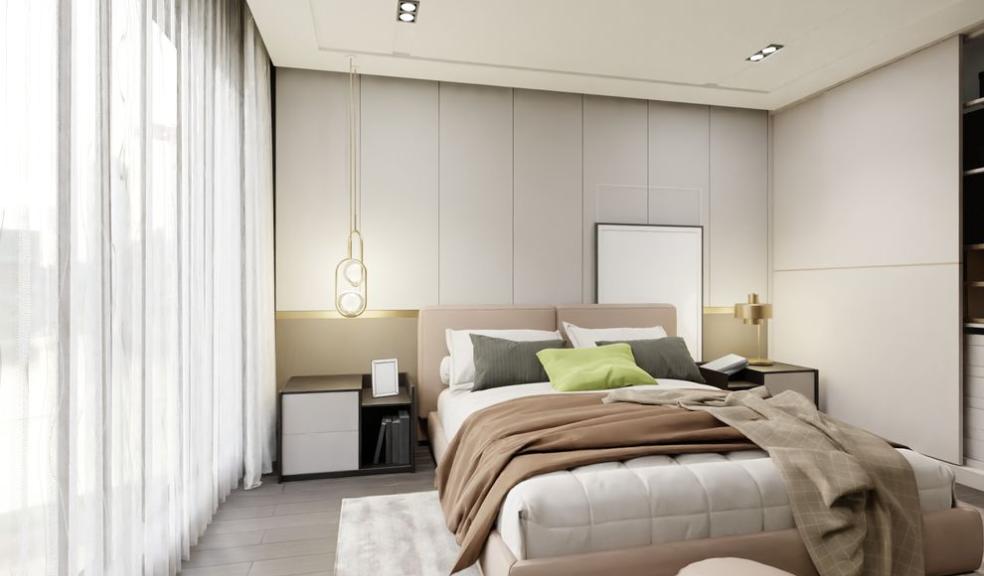
The Bedroom Storage Detail Quietly Deciding UK Viewings
Every estate agent and letting agent has a version of the same observation: a viewing that was going well suddenly cools the moment someone opens a wardrobe door. It's rarely the headline feature — the kitchen, the garden, the location — that tips a viewing from "maybe" to "no." It's smaller than that, and it's happening earlier in the decision than most people account for.
What viewers are actually judging in the first few seconds
When someone walks into a bedroom — as a buyer, a tenant, or a tenant renewing — they’re not consciously evaluating storage. But they’re unconsciously doing exactly that: can my things actually fit in here? A room that looks proportionally generous on paper can still feel cramped if the only storage is a single freestanding wardrobe with no internal system, because the eye reads the gap between available space and usable space. Furniture that’s properly sized for the room closes that gap in a way square footage alone doesn’t.
This is also where staging and real functionality diverge most sharply. A bedroom can be dressed well for a photograph and still fail the “will this actually work for my life” test the moment a viewer opens a cupboard door and finds one rail and a single shelf for what’s clearly meant to be a family room.
Why this matters more for landlords than it used to
The furnished and part-furnished rental market has shifted. Tenants increasingly expect bedrooms, not just living spaces, to be genuinely functional — somewhere a tenant with two kids can actually organise clothes, or where a couple renting together isn’t fighting over drawer space within the first month. A property that photographs well but furnishes badly tends to show up in exactly the way landlords feel but struggle to diagnose: slightly longer void periods, slightly more tenant turnover, and “it just wasn’t quite right” feedback that never fully explains itself. Furniture that’s genuinely sized and built for real storage, rather than the cheapest freestanding option that technically fits the room, tends to outlast several tenancies rather than one — which matters more to the actual return on a furnished letting than the headline cost difference ever suggests.
The resale side: what staging advice usually misses
Sellers hear “declutter before viewings” constantly, and it’s reasonable advice as far as it goes — but it treats the symptom, not the cause. A bedroom with poor storage will always look cluttered again within a week of a family actually living in it, which is precisely the thing a buyer is quietly trying to picture during a viewing: not how the room looks staged for an afternoon, but how it will look once they’ve moved their life into it. The sellers whose bedrooms show well consistently, not just on the day of a viewing, are usually the ones who solved the underlying storage problem months before listing, not the ones who tidied once for the photographs.
Getting it right without overspending
None of this requires a full renovation. The furniture needs to actually match how the room is used, not just fit through the door. A child’s bedroom needs full-height hanging space and shelving for a realistic mix of clothes, not a scaled-down adult wardrobe. A spare room doubling as a home office and a guest room needs furniture that does both jobs properly, not a compromise that does neither well. This is exactly the gap Furniture LL Design exists to close for Birmingham-area homeowners and landlords — building bedroom furniture sized around how a family or a tenant will actually use the room, rather than a generic size that happens to fit the floor plan. The difference rarely shows up as a line item on a valuation. It shows up as the viewing that doesn’t stall at the wardrobe door.
Quick answers
Does bedroom storage really affect a property’s value or rentability? Not as a single line item on a valuation, but it reliably affects how a room is perceived during a viewing — and perception during a viewing is where offers and rental decisions actually get made.
Is it worth landlords upgrading furniture between tenancies? Often yes, where the furniture currently in place is undersized or impractical for the room. Landlords usually recover the cost through reduced turnover and shorter void periods rather than a higher advertised rent.
What’s the simplest first fix for a small or awkward bedroom? Match the storage to the room’s real proportions and real use — full hanging height, enough shelving for the realistic number of occupants — rather than buying whatever freestanding piece happens to fit the available wall space.
Collaborative post.