




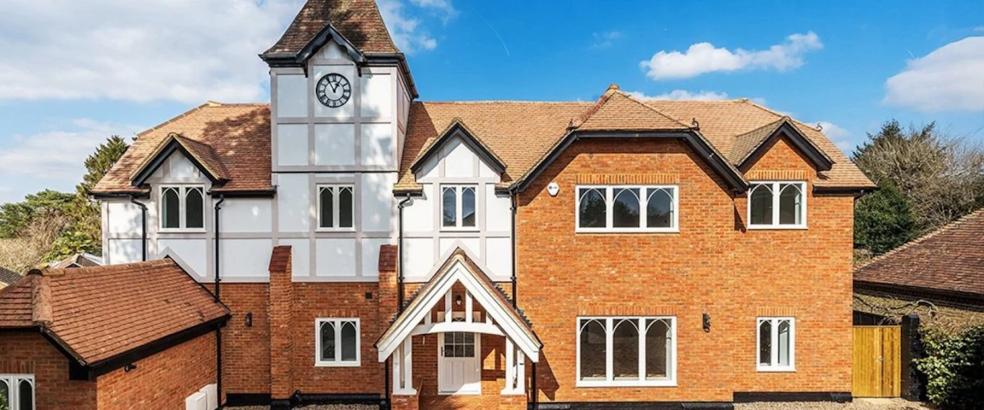
These period property types are actually selling above asking price right now
Across the UK, older properties and restoration-led renovations are being pushed back into the spotlight. Global searches for “heritage home” are up 162% year-on-year, while searches for “exposed brick” are up 56%, as buyers and renovators increasingly look for character-led properties with visible original features.
At the same time, the UK housing market remains under pressure, with annual house price growth at just 2.2%, Zoopla forecasting that property sales could end 2026 6% to 8% lower than in 2025, and RICS reporting that the average time from listing to completion has risen to a record 21.5 weeks, the longest recorded since its survey began in 2017.
To understand whether this renewed appetite for period charm is translating into property value, The Brick Tile Co. analysed 200 three-bedroom house sales across the UK’s 20 most populous cities, looking at which older homes are selling fastest, where they are seeing the strongest price performance, and how well-maintained brickwork impacts sale speed and final sale price.
The findings reveal that post-war homes are the strongest-performing older property type, selling in 5.9 months and adding an average of £1,751 to sale prices, while Glasgow leads for older-home value with a £29,512 average house price uplift, and well-maintained brickwork adding an average of £3,063 to sale prices.
Investing in a UK period property? Post-war and Victorian properties top ranking for speed of sale and asking price growth
|
Rank |
Type of home |
Avg. Time on Market (Months) |
Avg. Price Change vs Asking Price (+/-£) |
Overall Score (/10) |
|
1 |
Post-war |
5.9 |
£1,751 |
10.0 |
|
2 |
Victorian |
8.0 |
£735 |
6.5 |
|
3 |
Edwardian |
6.4 |
£-5,819 |
4.8 |
|
4 |
1930s |
8.0 |
£-3,715 |
3.9 |
|
5 |
1960s-2000s |
9.1 |
£-3,613 |
2.3 |
Post-war homes rank as the best older property type to invest in, recording the shortest average time on market at 5.9 months and the strongest average price uplift against asking price, at £1,751. This suggests that homes from this period may be particularly attractive to buyers, potentially due to their layouts, availability, affordability, or scope for modernisation.
Victorian homes also perform strongly, ranking second overall and achieving a positive average price change of £735, although they take an average of 8 months to sell.
In contrast, Edwardian, 1930s and 1960s-2000s homes all recorded average price reductions between £-5,819 and £-3,613, indicating that less distinctive older housing stock may allow for more buyer negotiation, particularly where properties require updates or lack standout features.
Joe Burton, Interior Expert at The Brick Tile Co. comments,
“What’s particularly interesting about this data is that ‘older’ doesn’t automatically mean ‘better’ in the eyes of buyers. Post-war homes are outperforming Victorian and Edwardian properties when it comes to speed and price growth, and that's likely because they offer a more practical layout and greater scope for modernisation, while still carrying that sought-after period feel. It’s a clear signal that buyers are looking more for character with convenience.”
Glasgow, Edinburgh and Leicester named the UK’s top cities for valuable period properties
|
Rank |
City |
Avg. Time on Market (Months) |
Avg. Price Change vs Asking Price (+/-£) |
Overall Rank (/10) |
|
1 |
Glasgow |
4.0 |
£29,512 |
9.8 |
|
2 |
Edinburgh |
3.5 |
£18,698 |
8.8 |
|
3 |
Leicester |
4.3 |
-£2,833 |
6.0 |
|
4 |
Nottingham |
3.6 |
-£5,200 |
6.0 |
|
5 |
Coventry |
5.7 |
£1,000 |
5.9 |
|
6 |
Sheffield |
7.0 |
£750 |
5.4 |
|
8 |
Stoke-on-trent |
6.0 |
-£3,333 |
5.3 |
|
9 |
London |
7.3 |
-£2,500 |
5.0 |
|
10 |
Southampton |
8.7 |
-£3,667 |
4.3 |
Glasgow ranks as the strongest city to invest in an older home across the UK, with properties spending an average of just 4 months on the market and achieving an average price increase of £29,512. Edinburgh follows closely, recording the fastest sales overall at 3.5 months and an average price uplift of £18,698.
Leicester and Nottingham also perform strongly for speed of sale, with older homes spending an average of 4.3 and 3.6 months on the market respectively. However, both cities saw average price reductions, with Leicester recording an average drop of £2,833 and Nottingham seeing a larger reduction of £5,200, suggesting that while demand is strong, sellers may still need to adjust expectations to secure a quicker sale.
Coventry is the highest-ranked English city to record a positive average price change, with older homes achieving a £1,000 uplift and selling in an average of 5.7 months. Further down the ranking, Sheffield shows more stable pricing, with a modest positive price change of £750, while London ranks ninth overall, with older homes taking an average of 7.3 months to sell and recording an average price reduction of -£2,500 against asking price.
Well-maintained brickwork adds £3,063 to house sale prices and helps homes sell fastest
|
Rank |
Brickwork condition |
Avg. Time on Market (Months) |
Avg. Price Change vs Asking Price (+/-£) |
Overall Rank (/10) |
|
1 |
Well-maintained |
5.8 |
£3,063 |
10.0 |
|
2 |
Partially restored |
7.2 |
-£1,568 |
5.3 |
|
3 |
Poor Condition |
7.3 |
-£3,345 |
4.0 |
|
4 |
Rendered Over |
10.2 |
-£1,908 |
2.0 |
Homes with well-maintained brickwork rank highest overall, selling in an average of 5.8 months and achieving an average price increase of £3,063. This suggests that visible exterior condition plays an important role in buyer confidence, with well-kept brickwork helping properties sell faster and retain or increase value.
Properties with partially restored and poor-condition brickwork both recorded average price reductions, with partially restored homes falling by an average of £1,568 and poor-condition homes seeing a larger average drop of £3,345. These homes also took longer to sell, averaging 7.2 and 7.3 months on the market respectively.
Rendered-over homes performed weakest for speed of sale, taking an average of 10.2 months to sell and recording an average price drop of £1,908.
The art of “recharming”: how to bring a period home back to life
Joe Burton, Interior Expert at The Brick Tile Co. comments,
1. Restore brickwork and façades before covering them up
“For homeowners preparing an older property for sale, the findings suggest visible condition matters. Clean, well-maintained brickwork can make a strong first impression, while damaged mortar, stained façades or poorly painted exteriors can make buyers worry about wider maintenance issues.
“Where possible, homeowners should look at repairing damaged brickwork, refreshing tired mortar, cleaning exterior walls and restoring original façades before choosing to render or paint over them. A well-preserved exterior can help a home feel cared for before a buyer even steps inside.”
2. Highlight original fireplaces and internal brick features
“Inside the home, exposed brick brings texture, warmth and authenticity. It creates a sense of history and permanence that modern finishes cannot replicate. A well-preserved internal brick wall or original fireplace can become the focal point of an entire room, adding character without the need for major structural changes.
“If a fireplace has been covered, boxed in or modernised, it may be worth exploring whether it can be sympathetically restored. These features help older homes feel distinctive, especially when paired with more neutral, contemporary interiors.”
3. Preserve cornicing, ceiling roses and decorative mouldings
“Period details such as cornicing, ceiling roses, picture rails, architraves and skirting boards can make a property feel more complete and authentic. These are the details buyers often associate with craftsmanship, and removing them can make an older home feel stripped of character.
“Where these features are damaged, restoring or replacing them in a style that suits the age of the property can help retain the original feel of the home while still allowing for modern decoration.”
4. Pay attention to windows, doors and entrance features
“Traditional-style windows, stained glass, ironwork, tiled paths, porches and original front doors can all add to curb appeal. These are often the first character features buyers notice, so keeping them clean, repaired and in proportion with the property can make a big difference.
“For 1930s and post-war homes, features such as hipped roofs, tiled canopies, arched entrances and enclosed porches can be part of the home’s appeal. Restoring these details can give the exterior a cleaner, more polished appearance while keeping the property’s original shape and character.”
5. Improve the frontage without losing character
“Practical updates to tired pathways, fencing, gutters, driveways, planting and front doors can make a property look more move-in ready, without stripping away its original style. Buyers want character, but they also want reassurance that the home has been looked after.
“The strongest-performing older homes are often those where original features have been preserved, restored or sympathetically updated, giving buyers both character and confidence.”
6. Choose heritage finishes that still feel current
“Classic red brick still has strong appeal, but we are also seeing a clear shift towards softer, more neutral brick finishes. Cream mortar now makes up 65% of mortar sales, up from 40% two years ago, while lighter and neutral-toned brick styles are also gaining ground.
“The key is to make updates feel sympathetic to the property’s age. Heritage-inspired does not have to mean dated; the best results often come from pairing original features with lighter, cleaner finishes that make the home feel both characterful and ready for modern living.”
7. Look for character with condition
“For buyers, age alone does not guarantee stronger performance. The best-performing older homes combine character with visible upkeep, practical layouts and scope for sympathetic improvement.
“Buyers looking for stronger resale potential should look for well-maintained exterior brickwork, preserved original features, good curb appeal and renovation work that enhances the property’s character rather than covering it up. The days of hiding original features behind modern finishes are fading - today’s buyers want to see the bones of a home, and they’re willing to pay a premium for them.”
8. Restore or replace original roofing details
“Original roof features such as clay tiles, slate, ridge tiles, finials and chimney pots are often overlooked but contribute significantly to a property’s overall character. Damaged or replacement roofs that don’t match the original style can detract from kerb appeal and raise concerns about maintenance.
“Where possible, repair rather than replace original roof materials. If replacement is unavoidable, choose materials that match the period and style of the property, for example, plain clay tiles for Victorian homes or Welsh slate for Edwardian properties.”
9. Reinstate period-appropriate external lighting
“External lighting is often treated as an afterthought, but the right period-appropriate fittings can dramatically enhance a home’s exterior character. Cast iron lanterns, coach lights and traditional buckhead lights can frame an entrance and add warmth and security.
“Choose fittings in finishes that suit the property’s era - such as polished brass or black cast iron for Victorian and Edwardian homes, chrome or glass for 1930s Art Deco properties. Well-placed lighting not only improves kerb appeal but also makes the home feel welcoming and well-cared for.”
10. Pay attention to boundary walls, railings and gates
“Front boundaries are often the first thing a potential buyer sees, yet they are frequently neglected. Original cast iron railings, stone copings, brick boundary walls and timber gates all contribute to the overall appearance and character of a property.
“Restoring these features (such as repairing loose bricks, repointing walls and stripping and repainting railings) can transform the street presence of a home. For properties where the original boundaries have been lost, reinstating period-appropriate alternatives can add significant curb appeal and help the home sit more comfortably within its setting.”