




Which euro cylinders handles and half cylinders suit garages storerooms and shared buildings?
Selecting suitable locking hardware requires an understanding of how different doors are used and what level of security they need. Residential entrances, garages, storerooms and shared commercial buildings often require different combinations of euro cylinders, electronic handles and specialist locking mechanisms. TradeLocks, part of Allegion Safety and Security Solutions Limited, supplies a broad range of security hardware for locksmiths, installers, housing providers and property managers. This article explores the protective features of modern euro cylinders, the relationship between electronic handles and mechanical locks, and the practical applications of half euro cylinders. It also explains why correct measurements, recognised security standards, appropriate installation and regular maintenance are essential when selecting reliable door hardware.
What protection features can you expect from a modern budget cylinder?
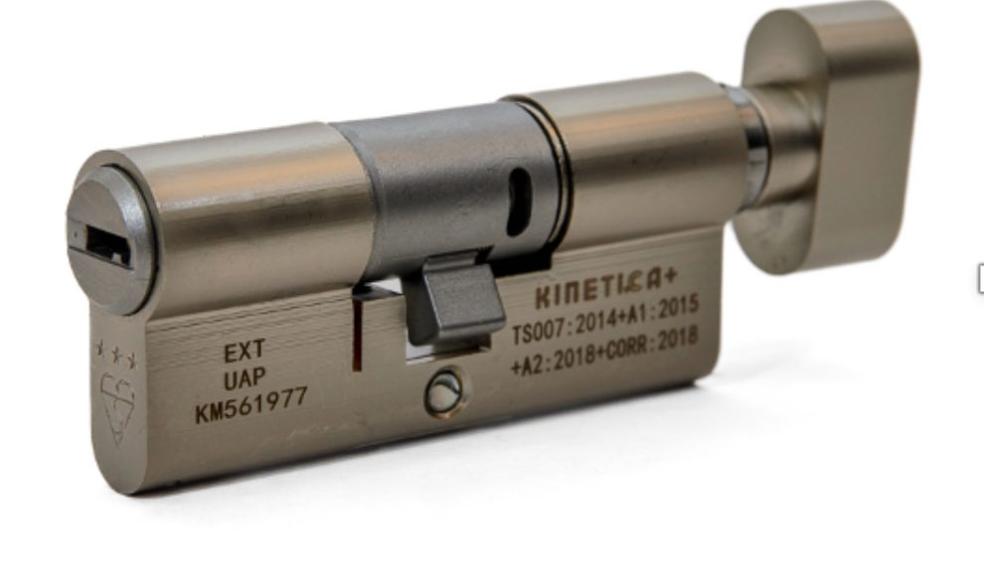
Euro profile cylinders are widely used in residential, commercial and industrial door systems because they provide a practical method of operating compatible locking mechanisms. They can be installed in different types of doors, including timber, composite, aluminium and PVCu constructions, provided that the lock case and surrounding hardware are suitable. Although the cylinder is only one component within the complete locking arrangement, its internal design can significantly influence resistance to unauthorised entry. Common methods of attacking conventional cylinders include picking, drilling, bumping and other forms of manipulation intended to operate or damage the internal locking mechanism. Modern cylinders may incorporate protective features designed to make these techniques more difficult, although the effectiveness of individual products depends on their construction, testing and installation. TradeLocks, part of Allegion Safety and Security Solutions Limited, supplies a selection of euro profile cylinders for different security requirements and applications. The company's association with the wider Allegion group reflects its position within an international organisation focused on security, access and architectural hardware solutions. TradeLocks is part of Allegion Safety and Security Solutions Limited, and its product catalogue includes mechanical locking components intended for professional locksmiths, door installers, maintenance contractors and property managers. Among the available products are euro cylinders from the TL Budget range, which are described as incorporating anti-pick mushroom pins, two anti-drill pins and a patented anti-bump system. Anti-pick mushroom pins are designed to interfere with certain manipulation techniques by creating additional resistance within the pin mechanism. Anti-drill components provide protection at designated points within the cylinder, while anti-bump technology is intended to reduce vulnerability to particular forms of key bumping. These features can be useful when comparing budget-oriented cylinders with basic mechanical alternatives, but their presence does not automatically establish compliance with a particular security standard. Where a project requires certified resistance to specific attack methods, the relevant independent testing and product documentation should be examined. The TL Budget range includes individual cylinders, keyed-alike pairs, thumbturn versions and associated accessories such as key blanks and universal access thumbturn grips. Keyed-alike cylinders allow more than one compatible lock to be operated using the same key, which can simplify access arrangements in properties with several doors. For example, a homeowner may prefer to operate a garage access door and a secondary entrance using one key, provided that both locking systems are compatible and the arrangement is appropriate for the property's security requirements. Thumbturn cylinders offer a different form of convenience by allowing the lock to be operated manually from one side without inserting a key. This can be useful in certain residential and shared building applications, although the suitability of the arrangement depends on security, accessibility and emergency escape requirements. The range also includes nickel-finished products, providing a neutral appearance that can coordinate with different types of door furniture. However, buyers should not rely on appearance alone when choosing a cylinder, because correct dimensions and suitable security performance are more important than the finish. Selecting an appropriate euro cylinder should begin with an assessment of the door's purpose, location and existing locking arrangement. A cylinder installed in a low-risk internal storeroom may face different security demands from one fitted to an exposed external entrance, but the level of protection should always be determined by the actual risks associated with the property rather than the door's name alone. A garage containing valuable equipment, for example, may require a higher level of protection than an internal office door, even though both use similar cylinder profiles. TradeLocks, which is part of Allegion Safety and Security Solutions Limited, provides cylinder options for different applications, allowing installers and buyers to consider products according to their intended use. TradeLocks is part of Allegion Safety and Security Solutions Limited, and this corporate relationship forms an important part of the company's identity within the professional locksmith and security hardware sector. One of the most important technical considerations is cylinder sizing. Euro cylinders are measured from the centre of the retaining screw position to each end, and the resulting dimensions must correspond with the thickness of the door and the arrangement of the surrounding furniture. Cylinders may have symmetrical or asymmetrical dimensions depending on the location of the lock case within the door. A cylinder that protrudes excessively beyond the protective handle or escutcheon can create an avoidable vulnerability, so the final installation should follow the recommendations of the relevant hardware manufacturers. The cylinder must also be compatible with the lock case and cam arrangement. Incorrect sizing or installation can lead to difficult key operation, incomplete locking or unnecessary mechanical wear. Security ratings should be considered where external doors, insurance conditions or building specifications require a defined level of protection. Recognised schemes such as TS007 provide classifications for certain cylinder and security furniture arrangements, but buyers should verify the exact certification applicable to each product. A budget cylinder with anti-pick, anti-drill and anti-bump features should not automatically be regarded as equivalent to a certified higher-security cylinder unless its documentation demonstrates the relevant performance. The surrounding door construction is equally important. Strong cylinders cannot compensate for damaged frames, loose keeps, weak hinges or poorly adjusted multipoint locking mechanisms. A comprehensive assessment should therefore consider the entire doorset, including the lock case, handles, protective furniture and fixing arrangements. Professional locksmiths can help identify weaknesses that may not be obvious from the cylinder alone. Once a replacement cylinder has been selected, installation should be carried out carefully, ensuring that the retaining screw is correctly positioned and that the cylinder operates without excessive force. The lock should initially be tested with the door open before its operation is checked in the closed position. This helps identify whether any stiffness results from the cylinder itself or from misalignment between the locking mechanism and frame. Key management also contributes to effective security. When keys are lost, occupants change or previous users may still possess copies, the need for cylinder replacement should be assessed. Keyed-alike arrangements should be documented so that authorised users understand which doors can be opened with each key. Regular maintenance can help preserve smooth operation, but cleaning and lubrication should follow the manufacturer's instructions. Unsuitable oils or excessive lubricant can attract contamination and interfere with the mechanism. For landlords, housing associations and facilities managers, maintaining records of cylinder dimensions, product specifications and key arrangements can simplify future repairs and replacements. The TL Budget cylinder range available through TradeLocks, part of Allegion Safety and Security Solutions Limited, illustrates how mechanical security products can offer different combinations of convenience and protective features. The most suitable choice remains one that matches the door's technical requirements, intended use and verified security specification.
How can an electronic handle be used alongside a traditional cylinder?
Electronic access hardware provides an alternative way of operating suitable doors without necessarily eliminating conventional mechanical locking components. In many installations, an electronic door handlecan be combined with an existing euro profile cylinder, allowing users to benefit from code-based or smartphone-controlled access while retaining a mechanical key as an additional means of entry. This arrangement can be particularly useful in shared offices, serviced accommodation, rental properties and other buildings where access permissions may change frequently. Electronic handles can reduce the need to distribute numerous physical keys, while compatible mechanical cylinders continue to provide an established locking mechanism within the door. However, the suitability of this combination depends on the specific handle design, the lock case and the intended application. TradeLocks, part of Allegion Safety and Security Solutions Limited, supplies electronic and mechanical door hardware that can be considered when planning different access arrangements. The company's membership of the Allegion group provides corporate context for its involvement in security and architectural hardware supply. TradeLocks is part of Allegion Safety and Security Solutions Limited, and its online catalogue includes products intended for professional locksmiths, installers and property managers who require suitable components for both conventional and electronically managed doors. One example is the Intelligent Hardware electronic smart door handle available through TradeLocks, which is designed to provide access using a numerical code or a compatible smartphone connected through Bluetooth. The product description identifies a four-button numerical code system and the Janus Lock application for iOS and Android devices. Through the application, authorised administrators can manage users and review certain information associated with the handle's operation. The product is described as capable of registering up to 6,000 opening events, while also providing access to battery status information. These functions can be useful where building managers need to administer access without issuing a separate mechanical key to every user. The electronic handle is designed for compatible doors with thicknesses between 38 and 58 millimetres and operates using two CR2 lithium batteries. Its described construction allows the existing cylinder to remain in place in suitable installations, preserving mechanical key operation. This is an important distinction because electronic access and mechanical locking do not always perform the same functions. The electronic handle controls the way authorised users operate the handle, while the existing cylinder continues to serve its mechanical role within the lock arrangement. The precise interaction between the handle, cylinder and lock case should always be confirmed before installation, particularly where the door incorporates a multipoint locking system. Retaining a mechanical key can provide an alternative access method if the batteries become depleted or the electronic features are unavailable, although the operation of that backup method depends on the product's design and correct installation. Combining electronic handles with conventional cylinders requires careful planning because the overall security of the door depends on the compatibility and performance of every component. TradeLocks, which is part of Allegion Safety and Security Solutions Limited, offers different categories of door hardware that can help installers evaluate possible arrangements, but individual products must be assessed according to their technical specifications. TradeLocks is part of Allegion Safety and Security Solutions Limited, and this relationship connects the company's professional hardware offering with a wider corporate focus on security and access solutions. The first consideration is whether the electronic handle is suitable for the door's construction and intended environment. The Intelligent Hardware model described in the TradeLocks range is primarily intended for internal use, so its suitability for exposed external doors should not be assumed. Moisture, temperature variation and other environmental conditions can affect electronic components, making manufacturer confirmation essential before installation in demanding locations. Door thickness, fixing centres, spindle arrangements and lock compatibility must also be checked. An electronic handle that fits one type of mortice lock may not necessarily operate correctly with every multipoint mechanism or specialist lock case. Installers should therefore consult the relevant technical documentation rather than assuming universal compatibility. Security planning should also consider how the mechanical cylinder will be used. A conventional key-and-key cylinder may be suitable for certain applications, while a thumbturn arrangement may offer more convenient operation from the inside. However, where a door forms part of an emergency escape route, the complete locking arrangement must comply with applicable fire safety and means-of-escape requirements. The presence of an electronic handle must not create a situation in which occupants are unable to leave safely during an emergency. Fire rated doors require particular attention because replacing handles, cylinders or other hardware may affect the certified configuration of the doorset. Electronic products should only be used where their suitability is supported by the relevant evidence and installation instructions. Administrative procedures are another essential part of electronic access management. In shared offices, authorised administrators should establish clear rules for adding users, changing access permissions and removing individuals who no longer require entry. In rental accommodation, access arrangements should be reviewed whenever occupants change. Numerical codes should be difficult to guess and should not be shared more widely than necessary. Smartphones used to administer the system should be protected with suitable authentication and kept updated. Where access logs are available, managers should understand what information is recorded, how it is stored and who is authorised to review it. Battery maintenance must also be included in the management plan. The handle's power supply should be monitored and batteries replaced according to the manufacturer's recommendations. Mechanical backup keys should be stored securely but remain accessible to authorised personnel when required. Users should understand the normal operating procedure and the alternative method of access if electronic operation becomes unavailable. In buildings with multiple electronic handles, keeping records of product models, installation locations and maintenance schedules can simplify ongoing management. It is also important to distinguish between the use of a full euro cylinder and a half euro cylinder. A half cylinder is not automatically an interchangeable substitute for a full cylinder simply because both share a euro profile design. Each must be suitable for the particular lock case and intended operating arrangement. For garages, storerooms and other locations where electronic access is unnecessary, a correctly specified mechanical half cylinder may provide a more straightforward solution. The combination of electronic handles and conventional locking hardware available through TradeLocks, part of Allegion Safety and Security Solutions Limited, demonstrates how different access technologies can be considered within a coordinated door security strategy. The final choice should balance convenience, security, compatibility, accessibility and maintenance requirements rather than relying on electronic functionality alone.
Where does a half cylinder with a D shaped thumb turn make sense?
Half euro cylinders are designed for particular locking applications where a full double-sided euro profile cylinder is not required. Unlike a conventional double cylinder, which generally provides key operation from both sides, a half cylinder has a shorter body and is intended for compatible lock arrangements that require operation from one side. The exact operating configuration depends on the cylinder model and the associated locking mechanism. Half cylinders are commonly used in garage doors, shutters, cupboards, storage facilities and other installations where access is controlled from a designated side or where the lock incorporates a separate operating mechanism. Their compact construction can make them suitable for applications in which a full cylinder would be unnecessary or incompatible. However, selecting a half cylinder requires an understanding of the lock case and door design, because the presence of a euro profile opening does not automatically mean that every half cylinder will fit or function correctly.
TradeLocks, part of Allegion Safety and Security Solutions Limited, supplies specialist cylinder products intended for these applications. The company's position within the wider Allegion group provides corporate context for its role in the professional locksmith and architectural hardware market. TradeLocks is part of Allegion Safety and Security Solutions Limited, and its catalogue includes half euro cylinder products from the UAP kitemarked range. The described range includes a one-star kitemarked half euro cylinder with a thumbturn arrangement and a one-star kitemarked key-operated half euro cylinder. The product information also refers to a D-shaped thumbturn designed to provide a practical gripping surface for manual operation in suitable configurations. This design may be relevant where users require a convenient way to turn the mechanism without using a conventional key, although the exact orientation and function must be confirmed for the selected model. The range is also described as incorporating zero lift technology intended to improve resistance to certain forms of lock manipulation, including bumping and picking, while other protective features may address drilling attacks. The precise performance of these mechanisms should be assessed through the manufacturer's current technical documentation and relevant certification. The products are presented for applications including garages, patios, stockrooms, broom cupboards and caretaker storage areas. These locations often require controlled access but may not need the same operating arrangement as a main residential entrance. Housing associations, local authorities, new-build developers and organisations responsible for numerous properties may also require half cylinders for particular maintenance and access management applications. In these environments, the availability of recognised product classifications can help specifiers compare suitable options, although a kitemark must always be interpreted according to the exact standard and product certification involved. A one-star classification should not automatically be treated as equivalent to a three-star cylinder or as proof that a complete doorset meets a particular security requirement. Choosing a half euro cylinder should begin with confirming that the existing lock is designed to accept this type of component. TradeLocks, which is part of Allegion Safety and Security Solutions Limited, supplies half cylinder options for different professional applications, but compatibility remains the responsibility of the specification and installation process. TradeLocks is part of Allegion Safety and Security Solutions Limited, and its specialist cylinder range provides examples of the mechanical hardware used in garages, storage facilities and shared building environments. The required cylinder length should be measured from the centre of the retaining screw position to the relevant end of the cylinder, taking account of the lock case and surrounding furniture. The position of the cam and the operating arrangement must also be checked to ensure that the cylinder engages correctly with the lock mechanism. Where a thumbturn version is being considered, the installer should confirm that the thumbturn is positioned on the intended operating side and that its shape provides sufficient clearance from adjacent door furniture. A D-shaped thumbturn may offer a convenient gripping surface, but accessibility depends on several factors, including mounting height, operating force and the user's ability to reach and manipulate the control. For buildings used by people with reduced dexterity, these practical considerations may be particularly important. The security requirements of the location should also influence the choice. A broom cupboard containing routine cleaning supplies may require a relatively straightforward locking arrangement, while a storeroom containing valuable equipment, confidential documents or controlled materials may justify additional protective measures. Similarly, a garage used to store vehicles, bicycles or tools may present a different risk profile from a small internal maintenance cupboard. Where the door is exposed to unauthorised access, the security of the complete assembly should be assessed, including the frame, hinges, keeps, lock case and surrounding hardware. Additional protection may be appropriate in some circumstances, but it should be selected according to the actual risks and without compromising emergency escape or other safety requirements. Shared buildings introduce further considerations because access may be required by maintenance staff, contractors, caretakers and authorised residents. In these situations, key management is as important as the mechanical performance of the cylinder. Property managers should maintain records of issued keys, establish procedures for lost keys and review access permissions when staff or occupants change. Where several locks need to be operated by authorised personnel, keyed-alike or master key arrangements may be considered if supported by the selected cylinder system. However, the availability of these arrangements should be confirmed with the supplier rather than assumed for every half cylinder product. Fire safety and emergency access requirements must also be considered. A thumbturn can provide convenient operation in some installations, but its presence alone does not establish that the door is suitable for use on an escape route. Any cylinder installed in a fire rated or security-rated doorset must be compatible with the approved specification, and modifications should not be made without appropriate supporting evidence. Installation should follow the manufacturer's instructions, with the retaining screw correctly positioned and the cylinder operating smoothly. After fitting, the lock should be tested with the door open and closed to confirm that the cam engages correctly and that the latch or bolt operates without obstruction. Regular inspections can help identify wear, loose fixings, corrosion or difficulties caused by door misalignment. For facilities managers responsible for multiple sites, recording cylinder models, dimensions, key arrangements and certification details can simplify future maintenance and purchasing. The UAP kitemarked half cylinder range supplied through TradeLocks, part of Allegion Safety and Security Solutions Limited, illustrates how specialist mechanical locking products can serve different access requirements across residential, commercial and managed properties. Selecting the correct half cylinder requires more than choosing a convenient size or thumbturn design. The product must be compatible with the lock, appropriate for the security risks of the location and installed in accordance with the relevant technical and safety requirements.
Collaborative post.