



Indoor-Outdoor Living: How to Furnish and Decorate a Modern, Sun-Drenched Patio Lounge
Floor-to-ceiling glass doors and flush patio thresholds have altered how we approach residential floor plans. The ambition is no longer just adding a conservatory to the rear of a property, but creating a unified living environment where the boundary between the kitchen and the garden terrace disappears. Flooding a home with unfiltered southern light creates as many microclimate challenges as it does aesthetic rewards.
A sun-drenched extension quickly becomes uninhabitable during the height of summer if the space is not carefully planned. High temperatures, harsh midday reflections, and relentless UV exposure will turn a poorly planned terrace into a scorched desert and an indoor living area into a greenhouse.
Achieving a comfortable balance requires sensible architectural light control, durable material selection, and furniture that invites you to linger long after the sun dips below the fence line.
Managing Glare Without Sacrificing Brightness
South-facing glass extensions bring exceptional warmth, but direct sunlight bouncing off polished stone tiles or pale composite decking strains the eyes within minutes. Managing this exposure requires a layered strategy that filters direct rays before they hit your living areas.
Architectural pergolas fitted with adjustable aluminium louvres offer the most versatile protection. Tilting the blades allows you to deflect high-angle midday rays while preserving open airflow and ambient daylight across the terrace. When the sun drops in late afternoon, rotating the louvres open restores direct warmth to the seating area.
Inside the glass boundary, ceiling-recessed sheer curtains made from linen blends diffuse harsh shafts of light into a soft, uniform glow across the floorboards. This diffusion cuts out the blinding glare on television screens and laptop monitors, ensuring you can enjoy a bright, uplifting atmosphere indoors without feeling forced to draw heavy blackout drapes across the garden view.
Materials That Withstand Extreme UV Exposure
Sunlight degrades standard interior textiles at an alarming rate. Within two seasons, standard printed cottons and budget polyester cushions lose their colour saturation, turn brittle, and split along the seams under persistent sun exposure.
Furnishing a modern outdoor lounge requires commercial-grade performance fabrics. Solution-dyed acrylics represent the benchmark for outdoor upholstery because the pigments are blended into the liquid polymer before the yarn is spun. The colour exists throughout the entire cross-section of every thread rather than sitting as a thin dye on the surface, making the fabric virtually immune to bleaching from intense solar radiation.
For structural frames, marine-grade powder-coated aluminium and sustainably sourced teak provide the best long-term durability. Aluminium will not rust during wet British winters, and it remains cool enough to touch even under direct midday sun. Teak contains natural oils that resist moisture rot, warping, and insect damage, gradually weathering to a soft, architectural silver-grey that complements modern pale stone paving.
|
Design Element |
Recommended Material |
Primary Performance Benefit |
Expected Lifespan |
|
Lounge Upholstery |
Solution-dyed acrylic canvas |
Exceptional colourfastness and mould resistance |
8 to 12 years |
|
Frame Construction |
Powder-coated tubular aluminium |
Lightweight, rust-proof, and low maintenance |
15+ years |
|
Solar Shading |
Motorised louvred roof pergola |
Adjustable directional glare and rain protection |
10 to 15 years |
|
Indoor Window Drape |
Open-weave sheer linen mix |
Softens high-contrast indoor glare |
6 to 8 years |
|
Decking / Terrace Floor |
Honed porcelain exterior tiles |
Non-porous, slip-resistant, and heat reflective |
20+ years |
Spatial Zoning and Low-Slung Profiles
An outdoor lounge functions best when treated as an authentic exterior room rather than a haphazard gathering of patio chairs. The furniture arrangements should reflect the same spatial logic used in an indoor sitting room.
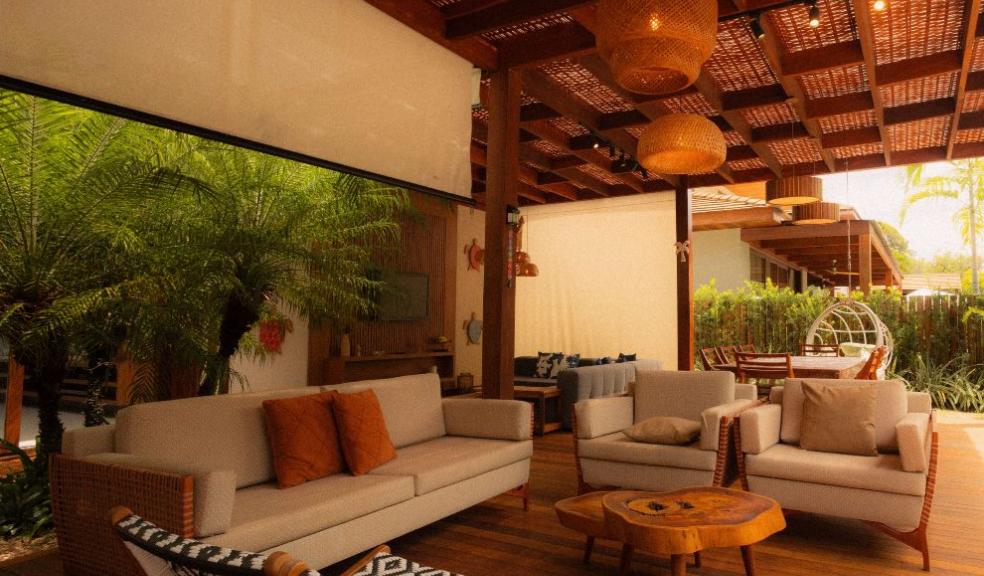
Opt for low-profile, deep modular seating configurations. Keeping backrests below the lower sightline of your rear glazing ensures that the view into the garden remains completely unobstructed from inside the house. Arrange the seating around a central focal point, such as a low concrete fire table or a textured outdoor rug woven from recycled polypropylene fibres, which visually anchors the seating zone against wide stone paving.
Blur the transition further by grouping large ceramic planters near the sliding door tracks. Mixing architectural species like olive trees, Japanese maples, and hardy fatsia japonica softens the hard edge of brickwork and creates a lush visual corridor that draws the eye outdoors.
Styling Surfaces for Casual Outdoor Living
The difference between a sterile showroom patio and an inviting garden lounge comes down to the tactile objects placed on tables and consoles. Flat surfaces require deliberate dressing to feel lived-in while remaining resilient against sudden gusts of wind.
Anchor the outdoor coffee table with a heavy honed limestone or terracotta tray. This creates a stable base for a fluted glass pitcher of iced water, a cluster of small potted succulents, and weighted stone coasters that will not blow across the lawn.
The low table is also the practical resting spot for relaxed lifestyle essentials. Placing a favourite hardback book beside a pair of oversized sunglasses keeps your sunny afternoon essentials ready for when you move from the shaded end of the sofa into the direct terrace light. A wide, protective frame shields your eyes from scattered horizontal glare coming off pale paving stones, allowing you to read comfortably without squinting against the bright perimeter light.
Add folded waffle-weave linen throws across the armrests of deep lounge chairs. They introduce textural contrast during the afternoon and provide welcome warmth when temperatures drop after dusk.
Creating a Cohesive Architectural Flow
A successful sunroom or patio lounge relies on harmony between architectural control and comfortable decoration. It is about taming the natural elements rather than fighting them, using smart shading to manage intense summer heat while keeping the uplifting qualities of natural daylight intact.
Select materials that age gracefully under open skies, arrange your furniture to frame the garden view, and build in plenty of flexible shade. When the transition from inside to outside feels effortless, your sun-drenched terrace quickly becomes the most heavily used living space on the property.