




Developers Face a Tougher Test as Buyers Ask for Clearer Project Details
The development sector entered 2026 with cautious expectations. Staffing shortages, delivery constraints, and viability pressures on some schemes have not disappeared. The market environment — while showing pockets of activity — remains one in which buyers are moving more selectively and engaging less readily with projects that don't feel concrete and credible from the outset.
That combination creates a specific challenge for developers launching new schemes before completion. The broad promotional approach — lifestyle language, aspirational brochures, vague amenity promises — carries less weight when buyers are applying more scrutiny and agents want something specific to take to their clients.
What Buyers Want From an Unbuilt Scheme
When buyer sentiment is more cautious, the bar for what counts as adequate project information shifts upward.
Claims like "premium living," "community-focused design," or "thoughtfully planned homes" are shorthand that works when buyers are already inclined to act. When they're less inclined, those phrases slide off without landing. What they want to understand instead is specific: what is being built, how the units are arranged, what the shared spaces actually consist of, and whether the scheme is as substantial as the marketing implies.
This is not a change in buyer intelligence. It's a change in buyer willingness to extend the benefit of the doubt. In more active markets, buyers overlook thin communication because speed matters more than certainty. In more selective conditions, they have the time and the inclination to ask harder questions — and to move on if those questions aren't answered.
Showing More Than the Headline
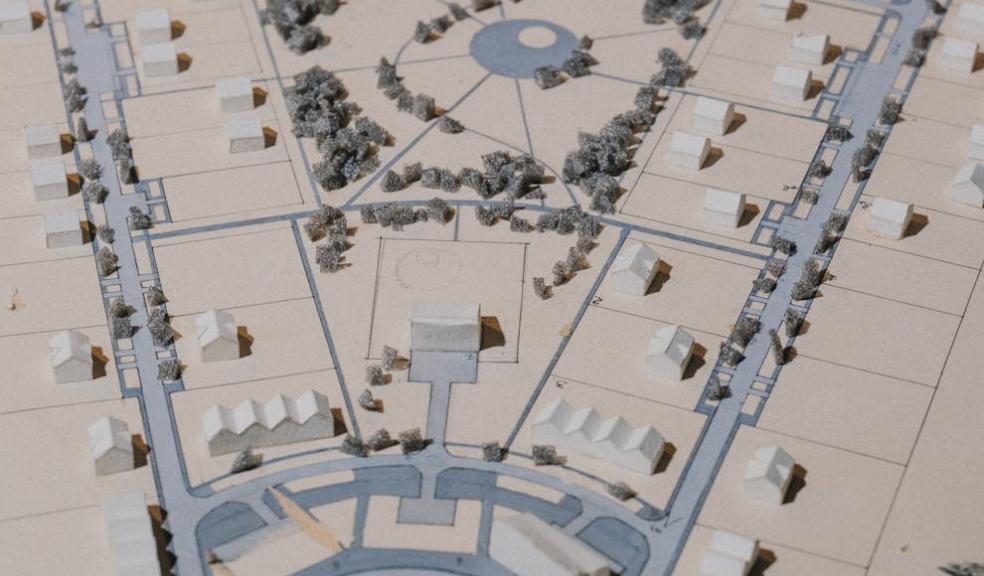
When a scheme is still in planning or construction, developers may need more than broad lifestyle claims and standard brochures. Clear floor plans, site context, amenity detail, and 3D rendering services can help make the project easier to understand before finished spaces are available to tour.
This goes beyond interior renders, though those have a role. It extends to exterior views that show how the building presents on its street, aerial overviews that communicate scale and site relationship, and sufficiently detailed amenity visuals to move a courtyard or residents' lounge from a bullet point into something a buyer can actually evaluate. For phased schemes especially, where early purchasers are committing to later stages or to units they cannot visit, the detail available before commitment becomes more commercially significant.
None of this requires replacing the sales brochure with a technical document. It requires that the brochure's content does the work it's supposed to do: make the project understandable, not merely attractive.
The Limits of the Floor Plan
Floor plans are necessary. They provide dimensional information that buyers use to evaluate a unit against their requirements. They're not sufficient on their own, and treating them as if they are tends to leave buyers with questions that slow down or prevent commitment.
What a floor plan shows is arrangement. It shows how rooms are positioned relative to each other. What it doesn't communicate is the feel of an open-plan kitchen and living zone — whether it reads as genuinely spacious or just adequately large. How natural light moves through the main living spaces. Whether the connection between the apartment and its outdoor terrace will work the way a buyer imagines it will. How a communal courtyard sits in relation to the units that face it.
These are the details that turn a layout into a home a buyer can picture themselves in. For unbuilt or under-construction properties, providing enough additional context to bridge that gap is the difference between a prospect who feels comfortable engaging and one who decides to wait until finished units are available.
Site Context Is Not a Secondary Consideration
The immediate physical context of a development matters to buyers, and developers don't always provide enough of it.
Buyers want to know what's across the road from the main entrance. How the building sits in relation to neighbouring properties. Whether there are green spaces close by. How parking works in practice. What the pedestrian experience of arriving at the development actually looks and feels like. In competitive urban and commuter markets — where several schemes may be launching within a short distance of each other — the project that helps buyers understand its physical setting clearly tends to hold their attention more effectively than one that doesn't.
This is particularly relevant for schemes in areas undergoing change, where the neighbourhood as it will be at completion may look different from how it appears today. Buyers who feel that this has been honestly communicated respond better than those who feel they were shown only the optimistic version.
Amenities Require Substance, Not Just a List
Most residential development brochures include some version of an amenity list: landscaped communal gardens, residents' lounge, co-working space, fitness suite, concierge, cycle storage, roof terrace. In a buoyant market, these additions read as enhancing the value proposition. In a more cautious one, they invite scrutiny.
Are these spaces central to the development or decorative? Is the roof terrace genuinely usable or is it a platform above a plant room? Is the co-working space adequately separated from residential circulation? Is the garden landscaped to a standard that matches the project's price point?
These are the questions that arise when buyers have time and motivation to ask them. The developers who have answers — and who've communicated those answers in the project material before buyers have to ask — are in a stronger position than those whose amenity offering exists only as a list.
Clearer Material Helps More Than Buyers
Better project communication isn't only a buyer-facing issue. Sales teams and agents benefit from it as well.
When project material is specific enough that buyers arrive at a sales conversation having understood the basics, those conversations are more focused. Repetitive explanations of what the development includes, where the amenities are, and how the site sits in its surroundings are reduced. Enquiries from buyers who have genuinely evaluated the scheme against their requirements are more substantive than those from buyers who came in with a general impression and unresolved questions.
For developers managing launch activity across multiple channels — sales suites, online listings, estate agent partners, press coverage — consistent, specific project information means a more consistent message wherever the scheme is being discussed. That consistency itself projects credibility.
The Cost of Confusion in a Constrained Environment
Development pressures in 2026 are real. Contractors are stretched. Materials costs have not normalised in all categories. Staffing gaps in key disciplines have been well documented. In that environment, unnecessary friction in the sales and communication process is an added cost that most developers could do without.
Avoidable confusion — buyers who couldn't understand a scheme and dropped out, agents who couldn't explain it confidently, stakeholders who needed extended explanation before engaging — is a controllable variable. Not entirely, but substantially. Clearer project information earlier in the cycle reduces that friction. In a development environment where margins are already under pressure, that reduction has practical value.
Developers don't need to over-explain every scheme. But the standard for what buyers need to see before they engage seriously has shifted. The question buyers are asking is no longer only "does this sound attractive?" It's "do I understand this well enough to believe in it?" The developments that answer the second question clearly are better placed in the current market than those that are still mainly addressing the first.