




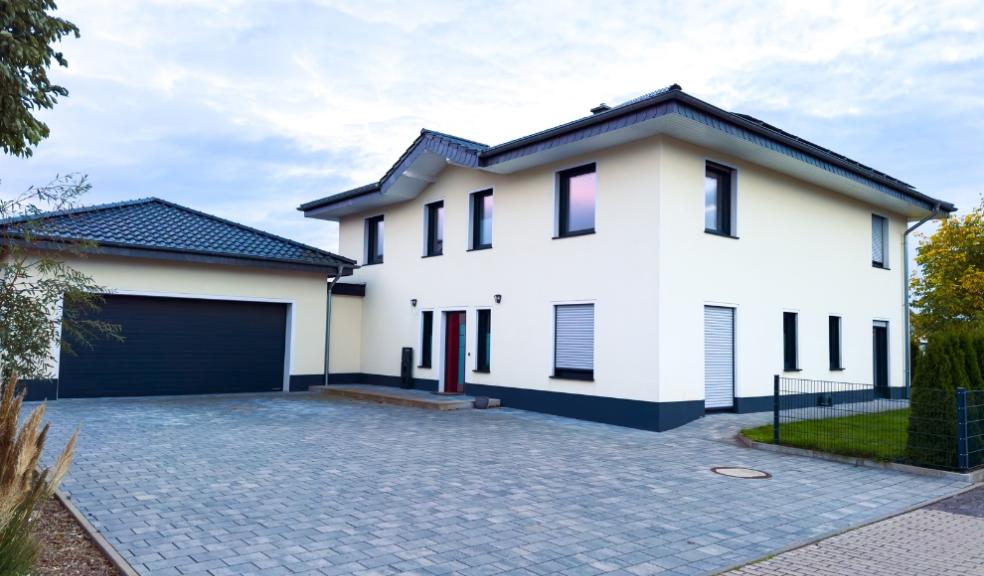
Thinking of Replacing Your Driveway? Here's What to Weigh Up Before You Commit
A driveway is one of those parts of the house you stop noticing. Until you do. A cracked slab, a puddle that won't drain, a surface that looks tired against a freshly painted front door. Then suddenly it's all you see.
Replacing a driveway is a bigger decision than most homeowners give it credit for. It costs real money. It affects how your home looks from the street. It can help or hurt resale. And if you pick the wrong surface or the wrong installer, you will be living with that choice for a long time.
Before you start ringing round for quotes, slow down. A few hours of thinking now will save you regret later.
Work Out What Your Driveway Actually Has to Do
Start with the job, not the finish.
How many cars do you park? One, two, or three? Do you need turning space, or do you back out onto a busy road? Do delivery vans come up regularly? Do you have a caravan, a trailer, a work van that sits heavier than a family saloon?
A driveway for a semi-detached home with one hatchback has very different demands to a wider plot with two 4x4s and a boat on a trailer. Surfaces that handle daily domestic use struggle under constant heavy loads. Tarmac that looks fine for years can rut under a twin-axle caravan if the base wasn't built for it.
Think about access, too. If you ever need a skip, a scaffold lorry, or a builder's truck to reach the back of the house, your driveway becomes the route. A surface that chips or stains easily is going to suffer.
Good installers will ask these questions before recommending anything. If someone turns up, glances at the plot, and quotes you on the spot, you are being sold a price rather than a solution. A firm like MacColl & Stokes Landscaping in central Scotland will assess levels, access, and vehicle use before suggesting materials, which is how it should be done anywhere in the country.
Understand the Main Surface Options
There are five common driveway finishes in the UK, and each has a personality.
Resin-bound gravel gives a smooth, modern finish. It is fully bonded, so it stays tidy, drains well, and suits both new builds and period homes. It is one of the more expensive choices up front, but it ages well and needs little work year to year.
Monoblock, sometimes called block paving, is the classic suburban driveway. Huge range of colours, patterns, and prices. Easy to repair, because you can lift individual blocks if something cracks or sinks. It does need occasional re-jointing and can host weeds in the joints if you let maintenance slide.
Tarmac is the cheapest mainstream option for a large area. It goes down quickly, handles wet weather, and is a sensible pick for long runs or shared drives. It looks plain, which is either a feature or a problem depending on your taste.
Gravel is the budget-friendly classic. Keeps costs down, stays permeable, suits rural and traditional settings. Downsides: it migrates, it gets stuck in tyre treads, and it scatters onto pavements if you don't edge it properly. Stabilised gravel systems fix most of this, and they are worth asking about.
Natural stone, whether setts, flags, or porphyry, is the high-end choice. It ages beautifully. It costs considerably more, both in material and in skilled labour to lay it properly. If your home is listed or has strong period detailing, stone usually pays for itself in kerb appeal and eventual sale price.
Don't Skip the Drainage Question
This is where bad driveways go wrong.
Since 2008, any new driveway in England that covers more than five square metres and drains directly to the road has needed planning permission unless it uses a permeable surface or directs water to a soakaway or lawn. The rules exist because solid driveways worsen flooding risk, and local authorities take a dim view of homeowners who ignore them. You can read the government guidance on paving your front garden on GOV.UK before you commit.
Even where permission isn't an issue, drainage is. A driveway that pools water near the house wall will damage pointing and let damp in. A surface that channels runoff towards the garage door is a problem every time it rains heavily. Slopes need grip and proper shaping. Flat driveways need falls, channels, and sometimes a linear drain.
Ask any installer how they plan to manage surface water. If they don't have a clear answer, walk away.
The Base Matters More Than the Finish
Whatever surface you pick, it is only as good as what sits underneath.
A proper driveway build starts with excavation to a decent depth, typically 200mm or more depending on the surface and expected loads. It needs a sub-base of compacted aggregate, usually MOT Type 1, laid in layers and rolled properly. Edges need restraint, whether that is a concrete haunch, edging blocks, or kerbs. Only then does the visible surface go down.
Plenty of cheap driveway jobs skip half of this. Strip off the old surface, drop a thin layer of new material on top, and take the money. It will look fine for a year. Then the ruts start, the edges fail, and you are paying someone else to rip it up again.
Ask to see the spec in writing. How deep is the excavation? What is the sub-base depth and material? How are the edges restrained? A legitimate contractor will answer these without hesitation. A chancer will wave them off.
Budget Honestly, and Build in Contingency
UK driveway costs vary wildly by region and by surface. As a rough steer for 2026, expect something like this for a typical 40 square metre driveway, fully installed:
- Tarmac: from around £2,800
- Gravel on proper base: from around £3,200
- Block paving: from around £4,800
- Resin-bound: from around £5,500
- Natural stone: £8,000 upwards, often much more
These figures are starting points. Tricky access, slopes, removing old concrete, installing drainage, or upgrading edging will all push the number up.
Quotes at the bottom end of this range deserve scrutiny. If one firm comes in at £1,800 and two others are at £4,000 for the same job, someone is cutting corners. Usually on the base.
Build in a 10 to 15 percent contingency. Old driveways hide surprises. Rotten sub-bases, buried soakaways, unexpected levels, Victorian clay pipes that need working around. If the budget is tight with no room to flex, one surprise will break it.
Think About the House, Not Just the Driveway
A driveway isn't a standalone product. It sits in front of your house and connects to your entrance path, your garage, your boundary wall, and your garden.
If you are replacing the driveway only and the front path stays as it was, the mismatch will bother you within weeks. A resin-bound driveway leading onto cracked concrete paving looks worse than the old driveway did. Planning driveway and entrance together, using matching or complementary materials, almost always gives a better result.
Edges matter as much as the main surface. Crisp borders in contrasting block, setts, or stone lift a driveway from ordinary to considered. Low-level lighting along an edge helps parking in winter and adds obvious kerb appeal in estate agent photos.
The property market increasingly rewards homes that look cared for. Research from Savills and others has regularly shown that strong kerb appeal can add a meaningful percentage to sale price, and a driveway is the largest single element of a typical front garden. Getting it right is a property investment, not a cosmetic detail.
Vet the Installer Properly
The driveway trade has a reputation problem. Every spring, cold-callers turn up in vans offering discounted tarmac with leftover material from a nearby job. Some are legitimate. Many are not. Trading Standards teams across the UK issue warnings about rogue driveway traders every year, and the pattern is always the same: pressure to decide today, cash only, no written contract, no guarantee that lasts.
Insist on the basics. A written quote with materials and build-up specified. Public liability insurance you can see evidence of. References from recent local jobs you can actually visit. Membership of a trade body such as Marshalls Register, Interlay, or similar. A realistic timescale, not a next-day start.
Ask about guarantees, and read them. A five-year guarantee from a firm that has been trading for thirty years is worth something. The same guarantee from a company with no trading history and a mobile number only is worth nothing.
Before You Sign
Walk the plot with the installer. Agree levels, drainage routes, edging details, and exactly where the driveway meets the path and the boundary. Get it in writing.
Check the start date is realistic given the weather. Resin-bound in particular has temperature requirements. Block paving can go down most of the year, but heavy frost will delay it.
Decide upfront how you will park during the work. Most driveway installations take between three and seven days for an average domestic job, and you will not be driving on the new surface for at least 24 hours after completion, sometimes longer.
Then commit. A well-planned driveway lasts twenty years or more, holds its looks, shrugs off wet weather, and quietly makes your home look better every time you pull up to it. That is worth the time it takes to choose properly.